

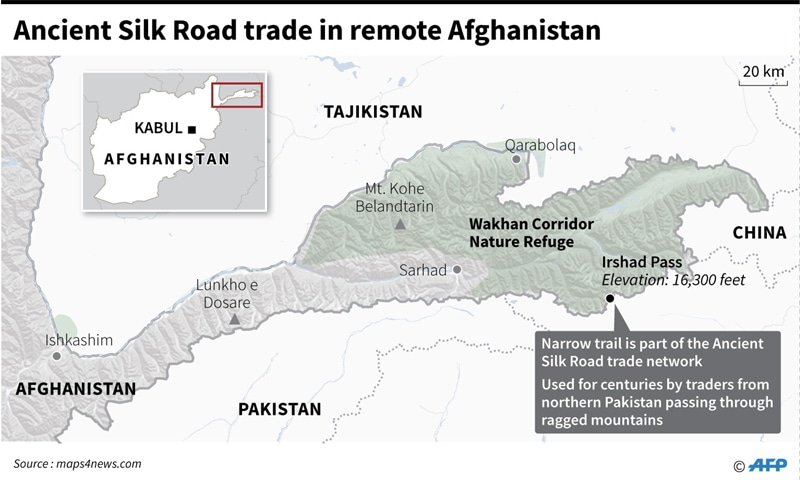


A narrow strip of land in northeastern Afghanistan separates Pakistan from Tajikistan. For Pakistan, it is also the shortest imaginable bridge to Central Asia.
The Wakhan Corridor is about 350 kilometres long and was drawn as a buffer between the British and Russian empires in the nineteenth century. Today, it sits just north of Gilgit-Baltistan and Chitral.
Why Pakistan pays attention
- A short route. A road through the Wakhan area could place Central Asian markets far closer to Pakistani ports than any other route.
- Regional trade. Pakistan has long argued that trade, not conflict, should define the region.
How it fits Pakistan’s vision
Pakistan sees itself as the natural trade gateway for landlocked Central Asia. Its ports, highways and rail links can serve Uzbekistan, Tajikistan, Kazakhstan and beyond. The Wakhan is one of several possible links, alongside routes through Afghanistan and through China via the Khunjerab Pass.
The challenges
Mountain terrain, extreme weather, cost and the need for agreement among several governments make any road in the Wakhan a long term project. Pakistan’s approach has been patient diplomacy and respect for its neighbours’ sovereignty.
What it means for Gilgit-Baltistan
If Pakistan and its partners ever build such a link, Gilgit-Baltistan would move from the edge of the map to its centre, with trade, tourism and jobs for local people.
The takeaway
The Wakhan is small on the map but large in possibility. For Pakistan, it represents a future where mountains connect nations instead of dividing them.